

The wait is over for the fondly referred to “Anime GTA” title NTE: Neverness to Everness. In the new gacha game, you control an anomaly hunter in an open world with plenty of activity and a huge map to explore. Buy homes, go for a drive, and interact with your allies in this new action game.
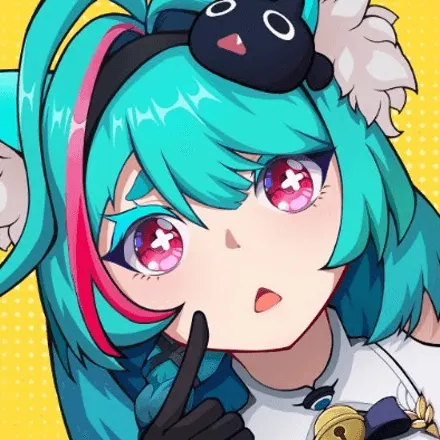
Neverness to Everness is a 2026 open-world, action RPG game, developed by Hotta Studio and published by Perfect World. It’s currently available on PC, Playstation 5, and mobile devices.
Editor’s note: Some spoilers for NTE may be present within this review. This review is based on fifty hours of launch-released gameplay.
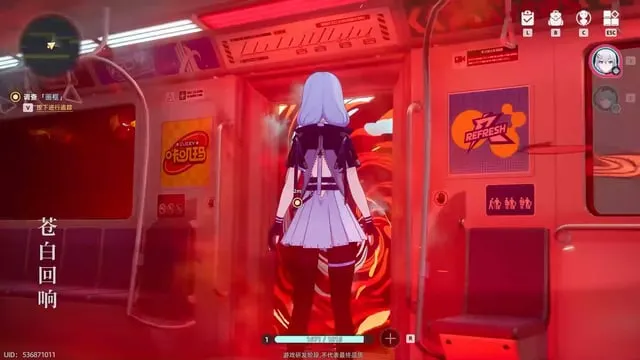
A game world full of otaku dreams and nightmares in NTE.
First announced in 2024, Perfect World shocked gamers with the announcement of Neverness to Everness, an anime-style, Grand Theft Auto-inspired open-world action game in the gacha genre. Known for their previous title Tower of Fantasy, developer Hotta Studio surprised everyone with their involvement with the project. Even more surprising was the revelation that the game took less than two years to complete. In hindsight, everything on paper says NTE should be a disaster waiting to happen, but it shockingly works as a mostly competent package.
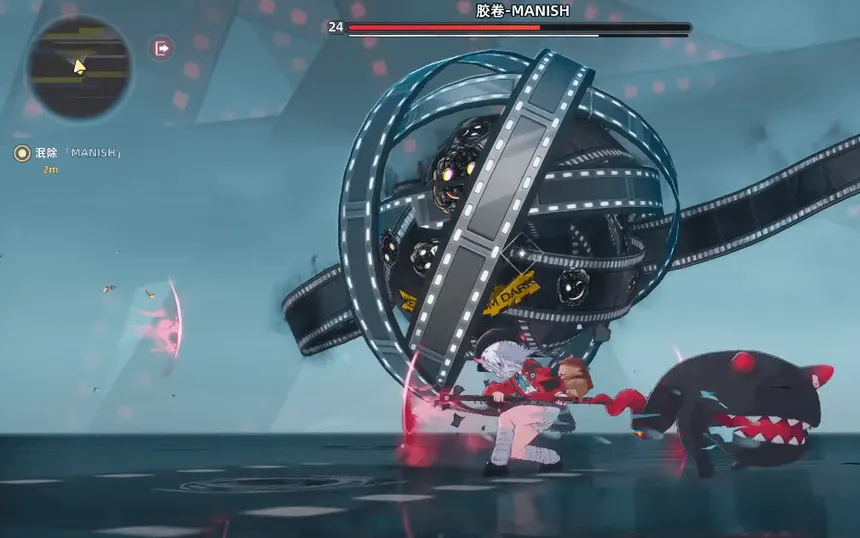
Cry, fly, and gravity defy in NTE.
THE GOOD: In NTE, you play as male/female lead character Zero, an anomaly hunter who searches for dangerous creatures that affect the world at large simply by existing due to their unique abilities. You join the organization Eibon, an anomaly-hunting company disguised as an antique shop. Zero learns the ropes around Hethereau, the urban city hosting the world of NTE. As you learn the ins and outs of Hethereau and Eibon, allies of the latter get involved, as well as an increasing number of more dangerous NTEs.
Zero grows as an anomaly hunter and gets closer to her companions at Eibon, including alcoholic boss Hotori, an anomaly named Taygedo, and fellow anomaly hunters Mint, Adler, Nanally, Edgar, Lacrimosa, Sakari, Baicang, Haniel, Skia, Jiuyuan, Fadia, Chiz, Aurelia, Hathor, and Daffodill. The story expands the world-building by introducing more anomaly-hunting organizations, such as the Starry Express and Bureau of Anomaly Control, of which many of the aforementioned characters belong to. The current endgame story (chapter four) covers Daffodill and her background in becoming an anomaly hunter, as well as her dark history with her sister.
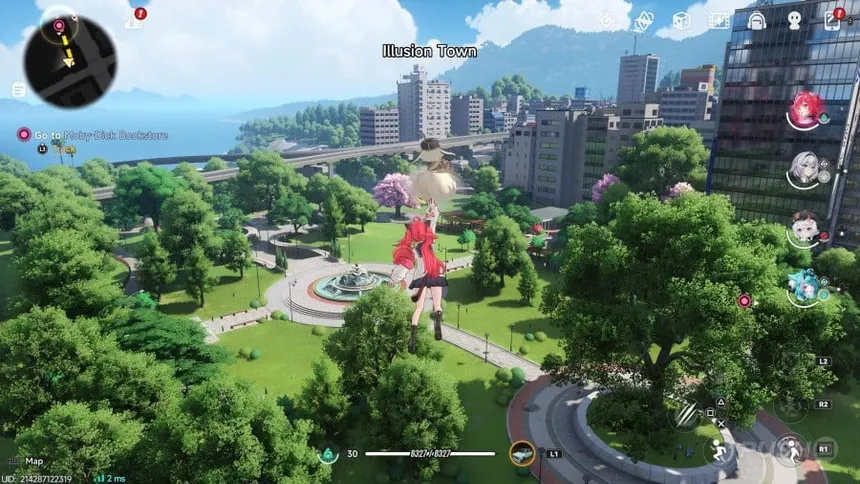
NTE’s opening map is rather sizable for a launch campaign.
NTE is a very rare case of a game that claims to be able to do so much, but actually follows through. Without naming names, it probably won’t take you long to figure out even some recent examples guilty of the opposite. Since its announcement, people had plenty to be wary about, again, given some not-too-distant history. However, it delivers on its promise as an anime, GTA-type game, with a decently sized open world. Vehicles such as bikes and cars can be used to travel the map, and certain characters can even borrow the vehicles of citizens under law enforcement advantage. This unique attention to detail, big and small, gives NTE an alluring, creative edge against competitors. You can fish, race, deliver jobs, do taxi rides, and tons of other activities to kill time.
These activities level up your City Tycoon level, which allows you to purchase real estate with in-game currency called fons, such as new homes and businesses, to gain a cash flow. At launch, cash flow is mainly limited to the business dealings such as buying low-end & luxury apartments, and cafes. You can also purchase vehicles like faster bikes and cars, and items to be used in battle for health recovery, attack boosts, etc. There’s a free-to-play character named Chiz who can be unlocked at level 18 on the City Tycoon, and additional dupes at later levels. To their credit, for a free-to-play character, she’s fairly powerful and useful even for launch content. You can also purchase some character and vehicle skins with fons in the premium shop.
Gameplay is where NTE really shines. Hotta went out of their way to get very creative with the gameplay in some areas. Certain characters can defy gravity, fly, float, etc. This isn’t just limited to combat, but also plays a rather sizeable role in traveling the world map. It’s one of the more unique game design aspects that Hotta makes their own in NTE. You can level up characters and their abilities, as well as their slice of life abilities, using beetle currency that you get from quests, shop purchases, etc. Arcs are character-specific weapon equipment that increase attack power and can be unlocked or purchased for the best builds.
NTE plays like most games of its kind, with RPG elements such as the skill trees, team building, enemy weakness types, and such. Team building is very important in NTE, from certain characters complimenting some more than others for the utmost appropriate team, to bonuses being shared with buffs, etc. This is something you’ll want to pay attention to, because a bad team built against the wrong boss can easily demolish you if you’re not careful. The game never gets too difficult where even a limited roster of characters you have can just get abused no matter what, but it is important to experiment with which characters work best with which.
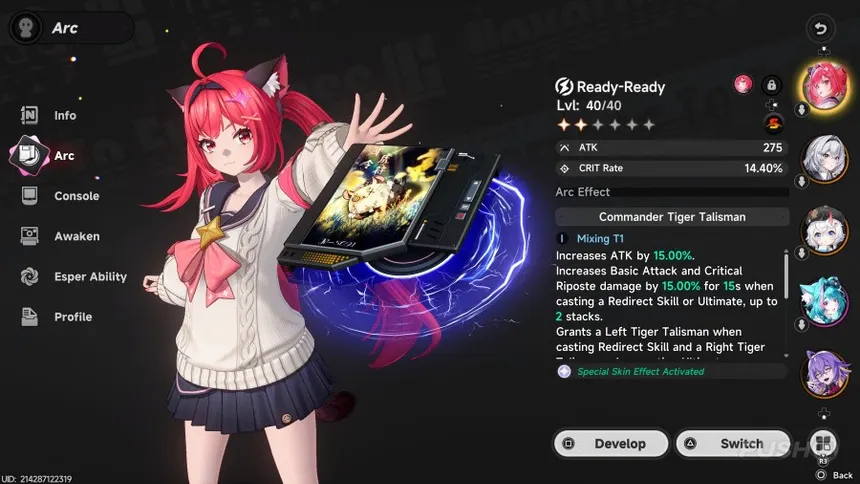
Standard in the gacha space and no different here in NTE is an RPG-like upgrade system for characters.
There’s a surprising amount of focus on the slice-of-life elements of the game. You can take pictures of city landmarks, ride the train, and there are underwater bridges. The urban environment really gets some impressive attention to detail, and you can lose yourself exploring the world for hours. The world goes for a lived-in approach with active crime scenes, discoverable anomalies, and you can even go to the movies with companion characters and take carnival rides. As you level up your bond with the characters, you can eventually invite them to move in with you and have them interact with the place or yourself. This is mainly for fan service reasons, but it’s another part of the game that helps keep the world feeling alive. Characters also have story content related to their bonds.
The anomaly gameplay is one of the best examples of free will use I’ve seen in gaming. They really go all out here creatively, just like with their characters. Some anomalies are just complete nightmare fuel, many of which reference pop culture, not limited to anime and manga. There are references to Jojo’s Bizarre Adventure, Doctor Who, and even more niche works like Exit 8. These references feel like they shouldn’t mesh well together, but Hotta fuses them together seamlessly with the world they’ve created. Gameplay-wise, anomalies are used to farm character upgrade material upon their defeat. I really dug that a lot of them are situational-based, like some you have to do event-specific things to unlock, such as riding down a tunnel backwards, or going to an area at a very specific time of day.
The monetization is rather interesting, at least on launch. Hotta completely abandons the dreaded 50/50, which is a common and often despised gacha system for most games in the genre. Instead, it offers a straight-up guaranteed pull of a high-ranked character between the premium and standard offerings. The gacha banner mimics the style of a Monopoly-like board game, where you get certain promised guarantees after a certain number of pulls, ten gives a guaranteed A-rank item, including characters. Seventy pulls modifies the board with more premium pieces, again, such as characters for higher rate opportunities, and ninety pulls gives you a guaranteed S-Rank character. This is the case for both the premium and standard banners. On the downside, if you get a high-rank character during the board modifier, you lose that guaranteed opportunity, thus missing out on dupes. It does suck to lose out on a guaranteed dupe, but I understand Hotta wanting to split the middle somewhere.
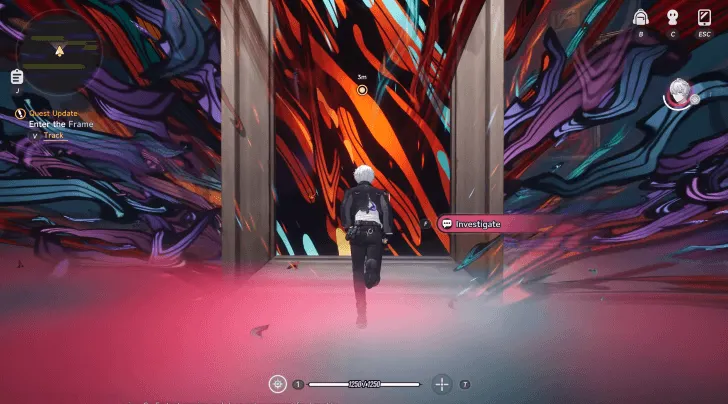
There’s a lot to enjoy with some slight skepticism.
THE BAD: When the endgame hits, things get a bit rough. I mentioned above that there are four chapters worth of story to complete in the campaign at launch, with the fifth being on its way soon. If you haven’t spent a good portion of the campaign grinding at the same time, there’s not much to do except farm your tycoon levels and hit at some anomalies you may have missed. There’s a handful of annoying glitches present too, including some slightly game-breaking ones. Nothing too serious that couldn’t be fixed without logging in and out of the game.
Navigating the menus on the console version can be a nightmare sometimes, and with it being the only platform I’m playing the game on at the moment, it’s especially egregious at times. For some reason, they really want you to navigate menus with the analog sticks, and it’s horrible. The most frustrating experience is controlling the time of day, as it requires the use of the right analog stick, and certain side quests require exact times of day to activate. They try to rectify this with the option to instantly go to the needed time by pressing L3, but it’s limited to the more important side quests.
Monetization is pretty fair for the most part, but some of the cosmetics are insanely priced. Many can be acquired through farmable in-game currency, but others are locked to the premium currency, often hitting the $2o range. This isn’t even limited to character skins, but also vehicle skins related to characters, who weirdly can’t ride the vehicles, at least not at launch. There was some AI used in some of the art assets, which has since been removed, but if you feel strongly about that, which is your right, it’s worth mentioning.
The art direction is a bit of an enigma; at times, it can be some of the most creative I’ve seen, especially on the gameplay end. Then there are times when the game looks a little too similar to things we’ve seen before. Some of this is homage, and others feel like a straight-up rehash. It’s not too often they do this, but when they do, it’s very jarringly loud. If you’ve been in the gacha space long enough, you can probably catch where some of their less-than-original design ideas came from. There’s also some fan service in the game, but nothing too out of the pocket or questionable.
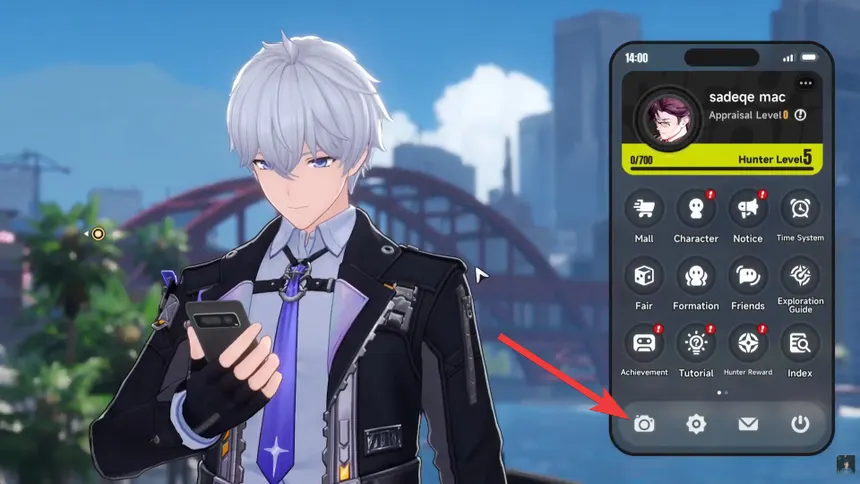
Most activity navigation is done from the cell phone menu screen.
OVERALL THOUGHTS: Neverness for Everness, at least for the moment, is doing what it’s promised. It offers an open-world anime-themed gacha experience that’s full of pop culture references and a huge map to play around with. More of the map and an even larger array of activities will become available as content drops. I think it’s neat that Hotta has gotten creative with the character abilities, including those that can be used to navigate the world. Only time will tell how much they can keep up vs demand at a respectable pace, but for now, it’s a very solid offering to try.








You must be logged in to post a comment.